PMMA plastic optical fiber
PMMA Plastic Optical Fiber Core
Optical fibers have become a cornerstone in modern communication technologies, enabling high-speed data transmission over long distances with minimal loss. Among various materials used for optical fibers, PMMA (Polymethyl Methacrylate) has emerged as a popular choice for the core of plastic optical fibers (POFs). This article delves into the properties, advantages, applications, and future prospects of PMMA plastic optical fiber cores.
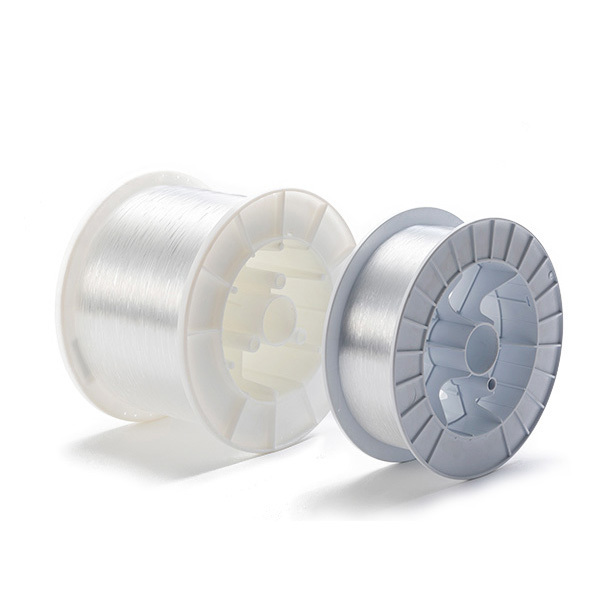
PMMA is a transparent thermoplastic that exhibits excellent optical clarity, making it an ideal candidate for optical fiber applications. The refractive index of PMMA is higher than that of air, allowing light to be guided through the fiber by total internal reflection. The core of a PMMA optical fiber typically has a higher refractive index than the surrounding cladding, which can also be made from PMMA or other materials. This structure enables efficient light transmission and is a fundamental principle behind fiber optics.
One of the most significant advantages of PMMA plastic optical fibers is their flexibility. Unlike traditional glass fibers, PMMA fibers can bend without breaking, making them easier to install in various environments. This flexibility is particularly beneficial in applications where space is limited or where the fiber needs to navigate around obstacles. Additionally, PMMA fibers are lightweight, which further simplifies installation and handling.


评论
发表评论